
Sciatica Relief at HealthFirst Chiropractic
Sciatica is one of our specialties at HealthFirst Chiropractic, and we’ve helped hundreds of patients finally get lasting relief after months or years of that burning, shooting leg pain. Our doctors identify exactly what’s compressing the nerve – and address it directly.
What Sciatica Actually Is
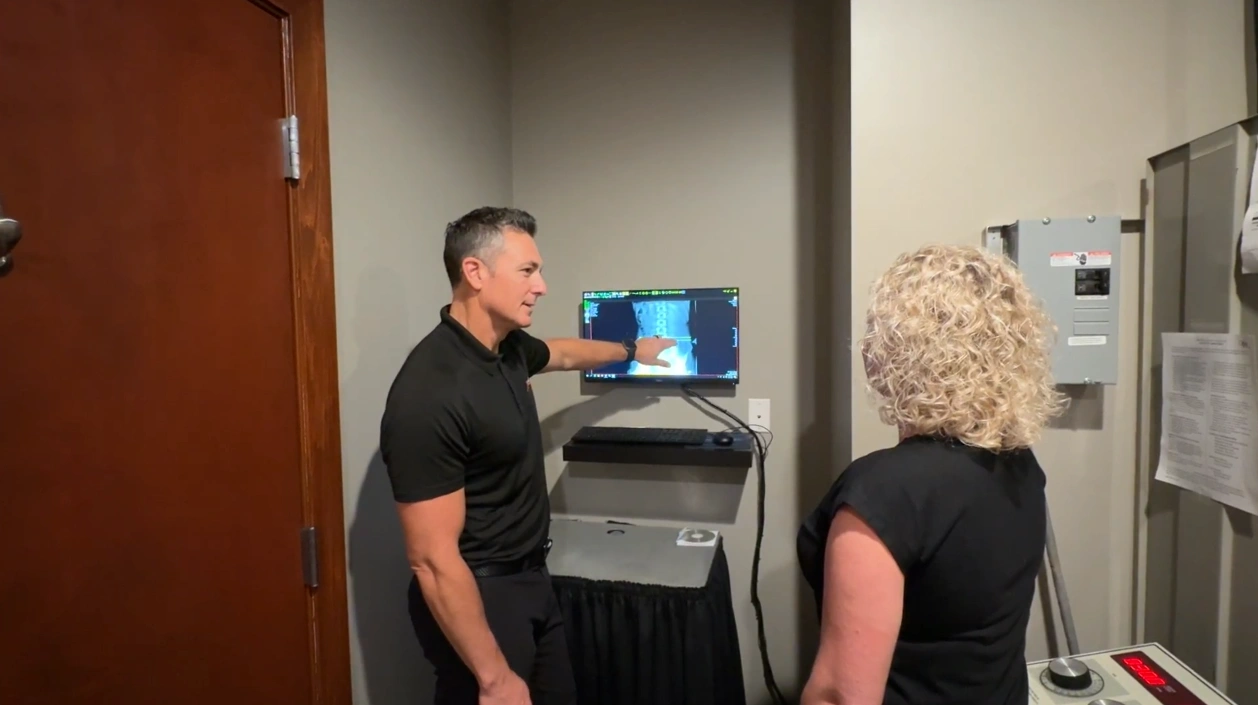
Sciatica is not a diagnosis of the spine itself – it’s a description of what happens when the sciatic nerve is being compressed or irritated somewhere along its path from the lumbar spine through the pelvis and into the leg. That distinction matters because the cause of the compression determines what treatment actually works.
The pain typically runs from the low back or buttock down the back of one leg, sometimes reaching the calf or foot. It can feel like burning, electric shock, deep aching, or numbness depending on which nerve root is involved and how severely it’s compressed. Sitting in a car or at a desk tends to make it worse. Getting up and moving around sometimes helps – temporarily.
What's Causing Your Sciatica
Identifying the specific source is the first job at HealthFirst because different causes require different approaches.
Lumbar Disc Herniation
The most common structural cause. A herniated disc at L4-L5 or L5-S1 presses directly on the nerve roots that form the sciatic nerve. This type typically worsens with sitting and forward bending and often comes with back pain alongside the leg symptoms.
Lumbar Joint Restriction
When lumbar vertebrae lose normal motion or position, they can narrow the space where nerve roots exit the spine – producing the same leg pain pattern without disc involvement. This type often responds quickly to chiropractic adjustments once the specific levels are identified.
Sacroiliac Joint Dysfunction
The SI joint connects the sacrum to the pelvis and is a frequently overlooked source of sciatica-type symptoms. When restricted or inflamed it refers pain into the buttock and down the leg in a pattern that closely mimics disc-related sciatica but requires a different treatment approach.
Piriformis Syndrome
The piriformis muscle sits deep in the glute and the sciatic nerve runs near it. When this muscle is chronically tight or in spasm – from prolonged sitting, hip imbalances, or overuse – it can compress the nerve in the pelvis rather than at the spine.
How HealthFirst Treats Sciatica
Chiropractic Adjustments
Lumbar and pelvic adjustments address the joint restriction and misalignment contributing to nerve compression at the source. For disc-related sciatica, adjustments restore proper spacing and mechanics at the affected lumbar levels. For SI joint involvement, pelvic corrections restore normal sacroiliac motion.
Spinal Decompression
For sciatica driven by disc herniation at L4-L5 or L5-S1, decompression creates a negative pressure environment that reduces the force on the compressed nerve root and encourages the bulging disc material to retract. Available at our Pickerington office and particularly effective for patients with confirmed disc involvement.
Cold Laser Therapy
Laser therapy reduces the inflammatory response around the compressed nerve root, helping adjustments hold longer and supporting faster recovery between visits.
When Sciatica Needs Immediate Medical Attention
Most sciatica is mechanical and responds well to conservative care. But certain symptoms require urgent medical evaluation rather than chiropractic: severe or rapidly progressive leg weakness, difficulty walking, loss of bladder or bowel control, or saddle anesthesia. If any of these apply, go to an emergency room. For all other presentations, chiropractic is an appropriate and effective first step.
Frequently Asked Questions About Sciatica
How do I know if my leg pain is actually sciatica?
True sciatica follows a specific nerve pathway – from the low back or buttock down the back of the leg, sometimes into the calf or foot. It’s usually one-sided and often accompanied by low back pain. Numbness, tingling, or weakness in the leg alongside the pain makes nerve involvement more likely. Your exam will confirm whether the sciatic nerve is involved and which structure is compressing it.
Can sciatica heal on its own?
Mild mechanical sciatica sometimes improves with rest and time. But sciatica caused by a herniated disc or structural joint restriction rarely fully resolves without addressing the underlying cause. Many patients experience temporary improvement followed by recurrence – and often the symptoms gradually worsen over time if the root cause is never corrected.
What is the difference between disc sciatica and piriformis syndrome?
Disc sciatica originates in the lumbar spine where a herniated disc compresses a nerve root. The pain typically worsens with sitting and forward bending, and back pain is usually present alongside the leg symptoms. Piriformis syndrome originates in the pelvis where the piriformis muscle compresses the sciatic nerve directly. Back pain is often absent or minimal, and the pain is concentrated in the buttock and leg. Your exam will distinguish between the two – they respond to different treatments.
Is it safe to get adjusted when I have sciatica?
Yes. Our doctors adapt the technique to your clinical presentation. Acute disc-related sciatica patients often start with flexion-distraction or instrument-assisted approaches before progressing to full Gonstead adjustments as the nerve settles down.
How long does sciatica take to get better with chiropractic care?
Most patients with mechanical sciatica begin noticing meaningful improvement in leg symptoms within the first several visits. Cases involving longer-standing nerve compression or significant disc herniation take more time. Your doctor will give you a realistic timeline at your result of tests.