
Neck Pain Relief at HealthFirst Chiropractic
Neck pain rarely resolves on its own when the underlying spinal dysfunction hasn’t been addressed. At HealthFirst Chiropractic, our doctors identify exactly which cervical levels are involved and correct them with precision. If your neck pain keeps coming back, that’s a sign the source has never been properly treated.
Why Neck Pain Develops
The cervical spine supports the full weight of the head – roughly 10 to 12 pounds – while allowing more range of motion than any other part of the spine. That combination of load and mobility makes it uniquely vulnerable to the effects of modern posture habits, old injuries, and accumulated stress.
When cervical vertebrae lose their normal position or motion, the surrounding muscles guard and tighten, nerves get irritated, and what started as occasional stiffness becomes a persistent, spreading pain pattern. Left unaddressed, those compensation patterns become structural – and the neck that used to hurt occasionally now hurts most of the time.
Common Causes of Neck Pain
- Forward head posture from prolonged screen use - for every inch the head drifts forward, the effective load on the cervical spine roughly doubles
- Whiplash from a car accident or sports impact that was never fully treated
- Sleeping position or unsupportive pillow holding the neck in an unnatural position for hours
- Accumulated stress that chronically tightens the trapezius and suboccipital muscles
- Previous neck injuries or degenerative changes that have been quietly progressing
One important connection: upper cervical dysfunction is one of the most overlooked sources of chronic headaches. The nerves at C1, C2, and C3 refer pain directly into the head. If headaches are part of your picture alongside neck pain, mention it at your first visit.
How HealthFirst Treats Neck Pain
Chiropractic Adjustments
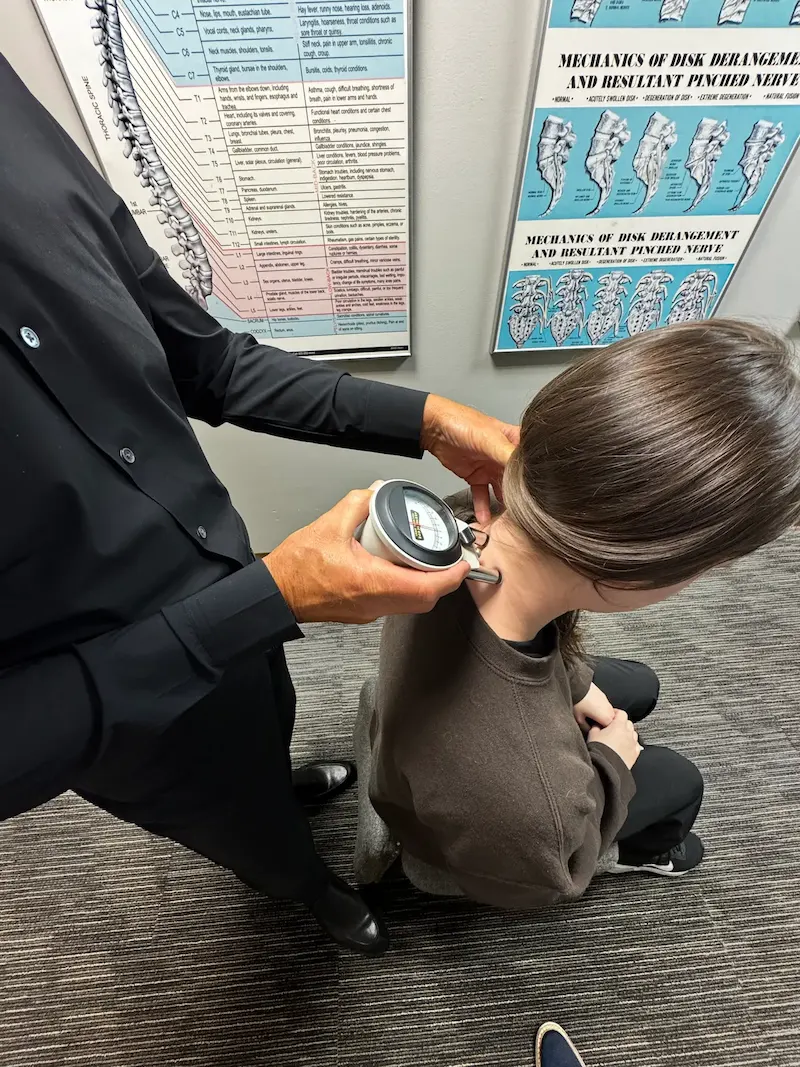
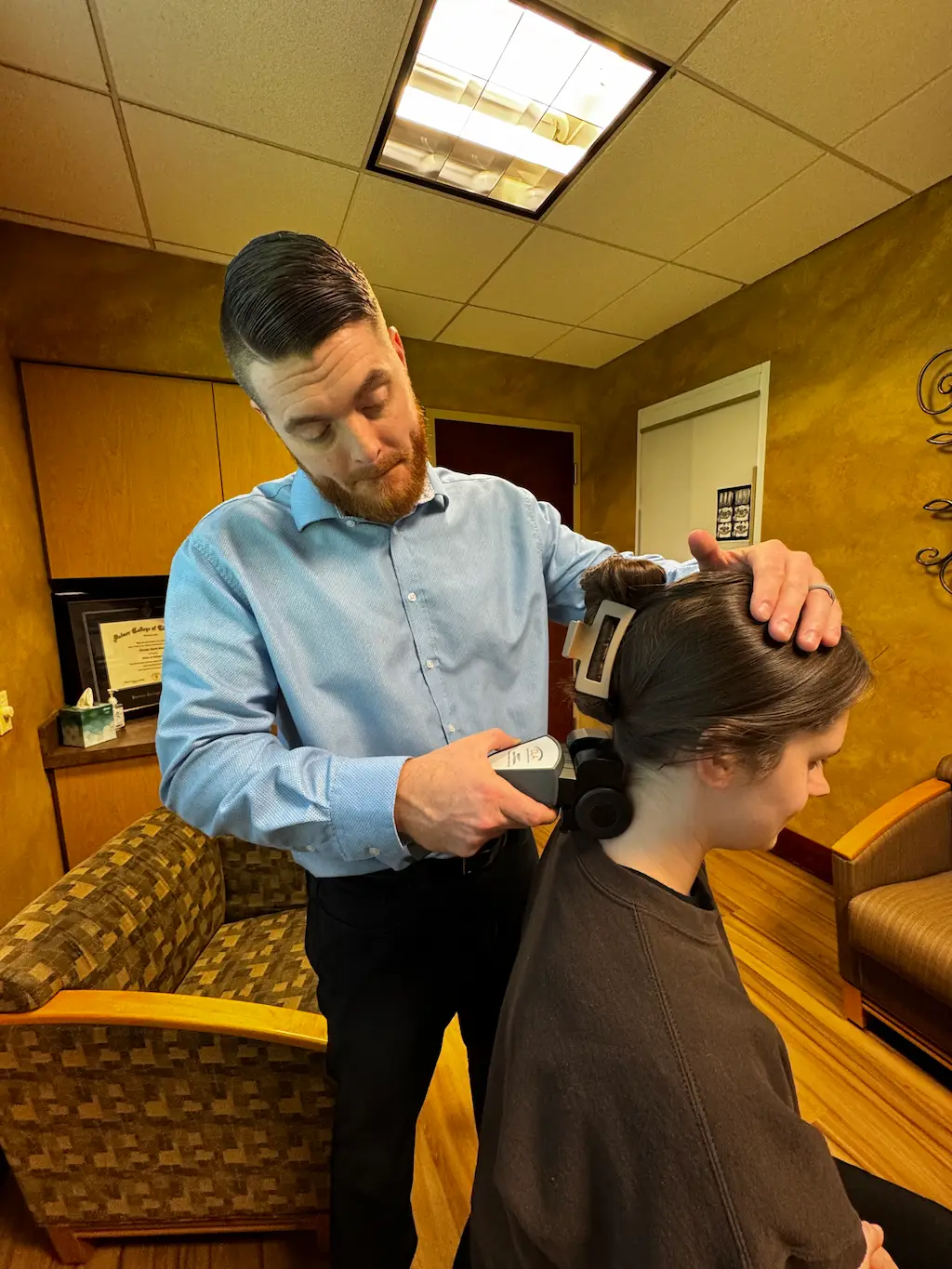
Cervical adjustments restore proper motion and alignment to restricted vertebrae, reducing the nerve irritation and muscle guarding that drive neck pain. Our Gonstead approach identifies the exact levels involved through X-ray analysis and instrumentation before any adjustment is made. For patients who prefer a gentler approach, instrument-assisted adjusting delivers a precise low-force correction without manual manipulation.
Cold Laser Therapy
Neck pain often involves a significant inflammatory component in the surrounding soft tissue. Laser therapy reduces cellular inflammation and improves circulation in the affected tissue, helping adjustments hold better between visits and accelerating overall recovery.
The Neck and Headache Connection
Many patients dealing with chronic headaches have never been told their neck might be the source. The upper cervical levels – C1, C2, and C3 – are directly connected to the nerves that supply the head and face. When these joints are restricted or the surrounding muscles are chronically tight, the result is often a dull ache at the base of the skull, pain that wraps around the side of the head, or tension behind the eyes.
If headaches are a regular part of your life alongside neck pain, the cervical component is worth addressing. For many patients, correcting the neck problem reduces headache frequency significantly faster than treating the two as separate issues.
Frequently Asked Questions About Neck Pain
Is it safe to get my neck adjusted?
Yes. Cervical adjustments performed by trained chiropractors are safe. At HealthFirst, no cervical adjustment is made without a full Gonstead analysis including X-rays confirming the specific levels and angles involved. For patients who are uncomfortable with manual cervical adjustments, instrument-assisted options achieve the same correction with a low-force mechanical impulse.
Why does my neck pain keep coming back?
Because the underlying dysfunction was never fully corrected. Most neck pain treatment – whether it’s massage, physical therapy, or medication – addresses the symptom rather than the joint restriction driving it. When the treatment stops, the problem resurfaces. Correcting the structural cause is what produces lasting results.
Can neck pain cause numbness or tingling in my arm?
Yes. When a cervical nerve root is compressed – from a disc herniation or joint restriction narrowing the exit space – it refers symptoms into the shoulder, arm, and hand along the nerve’s pathway. This is called cervical radiculopathy and it’s something our exam is specifically designed to identify and address.
What is tech neck and can chiropractic help it?
Tech neck refers to the forward head posture and cervical strain that develops from prolonged looking down at screens. Over time it creates real structural changes in the cervical curve and joint mechanics. Chiropractic addresses those changes directly and is one of the most effective treatments for tech neck – particularly when combined with posture awareness between visits.
Do I need X-rays before my neck can be treated?
In most cases yes. Digital X-rays are taken on-site at your first visit as part of the Gonstead analysis. They allow us to see exactly what’s happening structurally in your cervical spine before we touch anything.