
Low Back Pain Relief at HealthFirst Chiropractic
Low back pain is one of the most common reasons patients come to HealthFirst Chiropractic – and one of the conditions we’re most equipped to address. Whether it’s a mechanical problem that keeps coming back or a more complex structural issue, our doctors find the source and fix it.
Why Low Back Pain Keeps Coming Back
Most low back pain isn’t a muscle problem. It’s a joint problem that the surrounding muscles are reacting to. When spinal joints lose their normal motion or position, the muscles around them guard and tighten, and the pain cycle begins. Stretching and ibuprofen quiet it temporarily. But the underlying dysfunction is still there, and the pain returns – often worse each time.
The reason most low back pain recurs is that the structural cause was never properly identified or corrected. That’s the problem our process is specifically designed to solve.
Common Causes of Low Back Pain
- Lumbar joint restriction and facet dysfunction from prolonged sitting or poor posture
- Sacroiliac joint dysfunction - a commonly overlooked source of one-sided low back and hip pain
- Muscle strains from lifting, twisting, or sudden awkward movements
- Degenerative disc and joint changes that have been quietly progressing
- Weak core muscles leaving the lumbar spine without adequate support
- Old injuries that were never fully rehabilitated and keep flaring up
How HealthFirst Treats Low Back Pain
Chiropractic Adjustments
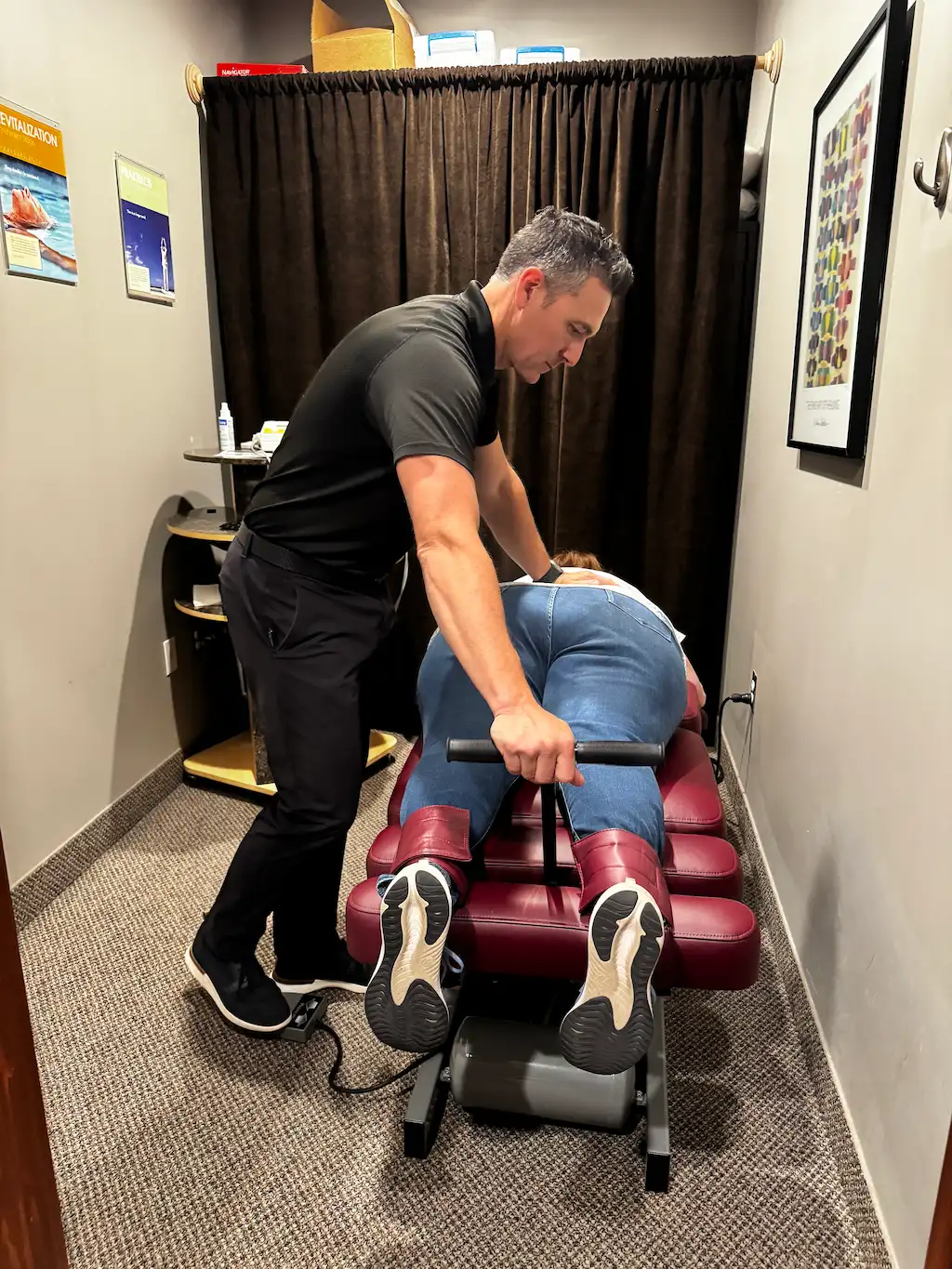
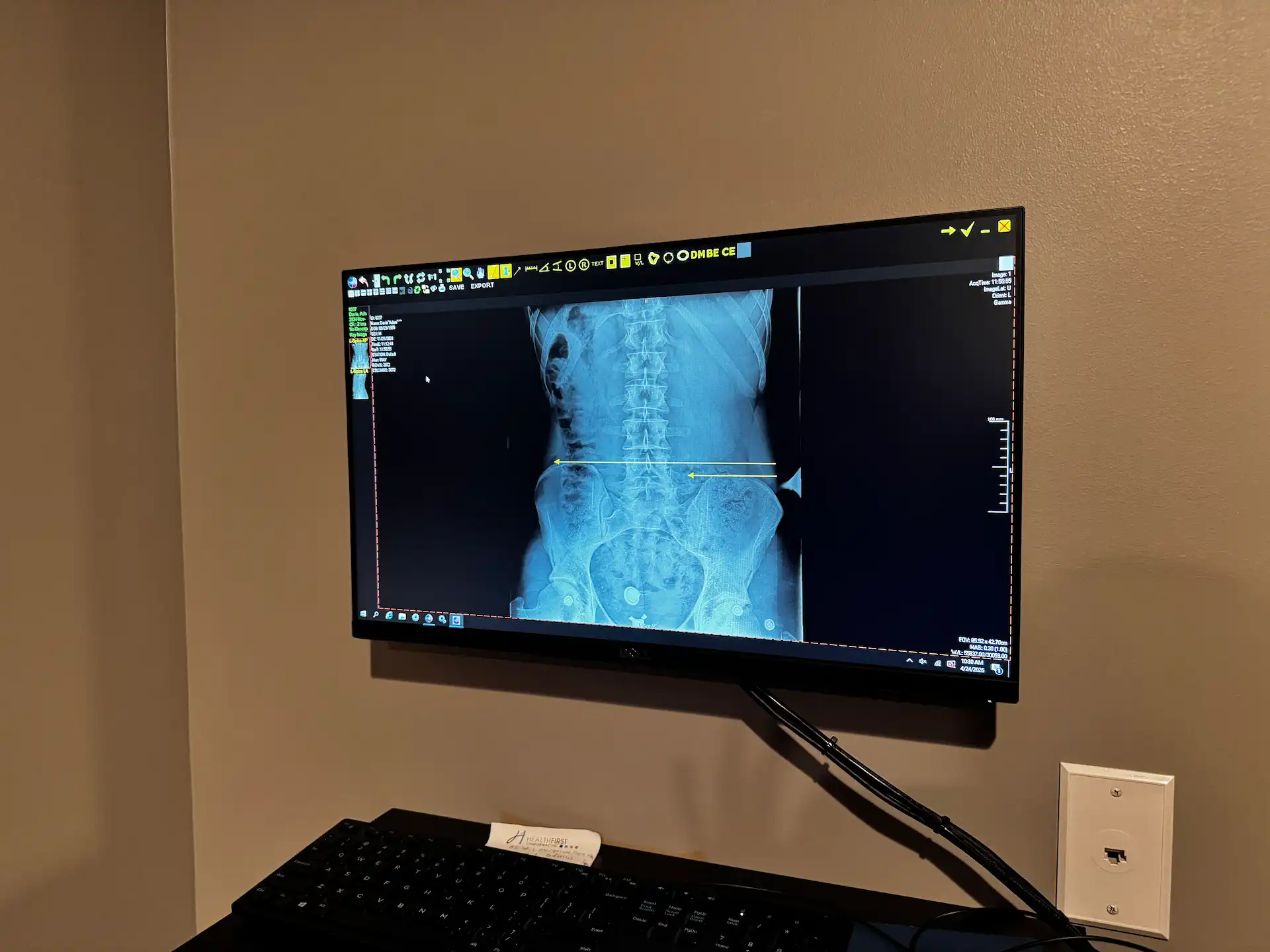
Gonstead lumbar and pelvic adjustments restore normal joint motion to restricted segments, reducing nerve irritation and the muscle guarding that keeps the pain cycle going. Every adjustment is based on a full clinical analysis including X-rays taken on-site. For sacroiliac dysfunction specifically, pelvic correction is often as important as treating the lumbar spine directly.
Cold Laser Therapy
For low back pain with a significant inflammatory component, cold laser therapy reduces cellular inflammation around irritated joints and nerves. When combined with adjustments, it helps corrections hold longer and speeds up recovery between visits.
Massage Therapy
Chronically guarded back muscles respond to massage in ways that accelerate the adjustment’s effectiveness. Available at our Westerville office as part of a broader care plan. (Note: massage is available at Westerville only.)
Acute vs. Chronic Low Back Pain
Acute low back pain – recent onset, often tied to a specific incident – typically responds quickly, sometimes within a handful of visits. The joints are recently restricted, the muscles haven’t had time to develop deep compensation patterns, and the body is still in active healing mode.
Chronic low back pain that has been present for months or years is a different situation. Compensatory patterns have developed throughout the spine and pelvis. Care takes longer and requires more consistency. But even long-standing low back pain responds well when the root cause is properly identified and addressed.
Frequently Asked Questions About Low Back Pain
Why does my low back pain keep coming back even after it gets better?
Because the underlying dysfunction was never fully corrected – only the symptoms were managed. When the pain quiets down, most people stop treatment. But the joint restriction or structural problem that caused it is still there. The next flare-up is usually triggered by something minor because the spine was already compromised. Correcting the root cause rather than just treating the symptom is what breaks that cycle.
How do I know if my low back pain is muscular or something more serious like a disc problem?
Your exam and X-rays will tell us. Muscular pain typically doesn’t radiate into the leg or cause numbness and tingling. Pain that travels into the buttock, down the back of the leg, or causes weakness in the leg suggests nerve involvement, which points toward a disc or joint compression issue. Your doctor will identify which is driving your specific presentation.
Do I need an MRI before I can be treated?
No. Most low back pain can be thoroughly evaluated with a clinical exam and X-rays. If your presentation suggests something that warrants further imaging, your doctor will refer you for an MRI. You don’t need one before coming in.
Is it safe to get adjusted when my back is really bad?
In most cases, yes. Our doctors adapt the technique to where you are clinically. Acutely inflamed patients often start with gentler approaches – flexion-distraction or instrument-assisted adjusting – before progressing to full hands-on care as the inflammation settles.
When is low back pain serious enough to see a medical doctor?
Low back pain accompanied by loss of bowel or bladder control, progressive leg weakness, fever, or pain following significant trauma warrants immediate medical evaluation rather than chiropractic. For everything else, chiropractic is an appropriate and effective first step.