Our Process - Precise, Results-Driven Chiropractic Care

At HealthFirst Chiropractic, every patient goes through the same disciplined three-step process: a thorough consultation, a detailed diagnostic exam, and a personalized result of tests with a clear care plan. No guesswork, no generic protocols.

A modern chiropractic reception area with a curved desk, three staff members, a stone accent wall with the 'Healthfirst Chiropractic' logo, and yellow pendant lights.

Why Process Matters in Chiropractic Care

Here’s something most patients don’t realize: two chiropractors can look at the same complaint and come up with completely different treatment approaches based on how thoroughly they assessed it. The quality of care you receive is directly tied to the quality of the process that precedes it.
At HealthFirst, we built our process around the Gonstead system, one of the most thorough and evidence-informed approaches in chiropractic. It requires more time upfront. It requires X-ray analysis, instrumentation, and careful clinical reasoning before an adjustment is made. And it consistently produces better outcomes than guessing at what’s wrong and hoping the adjustment helps.
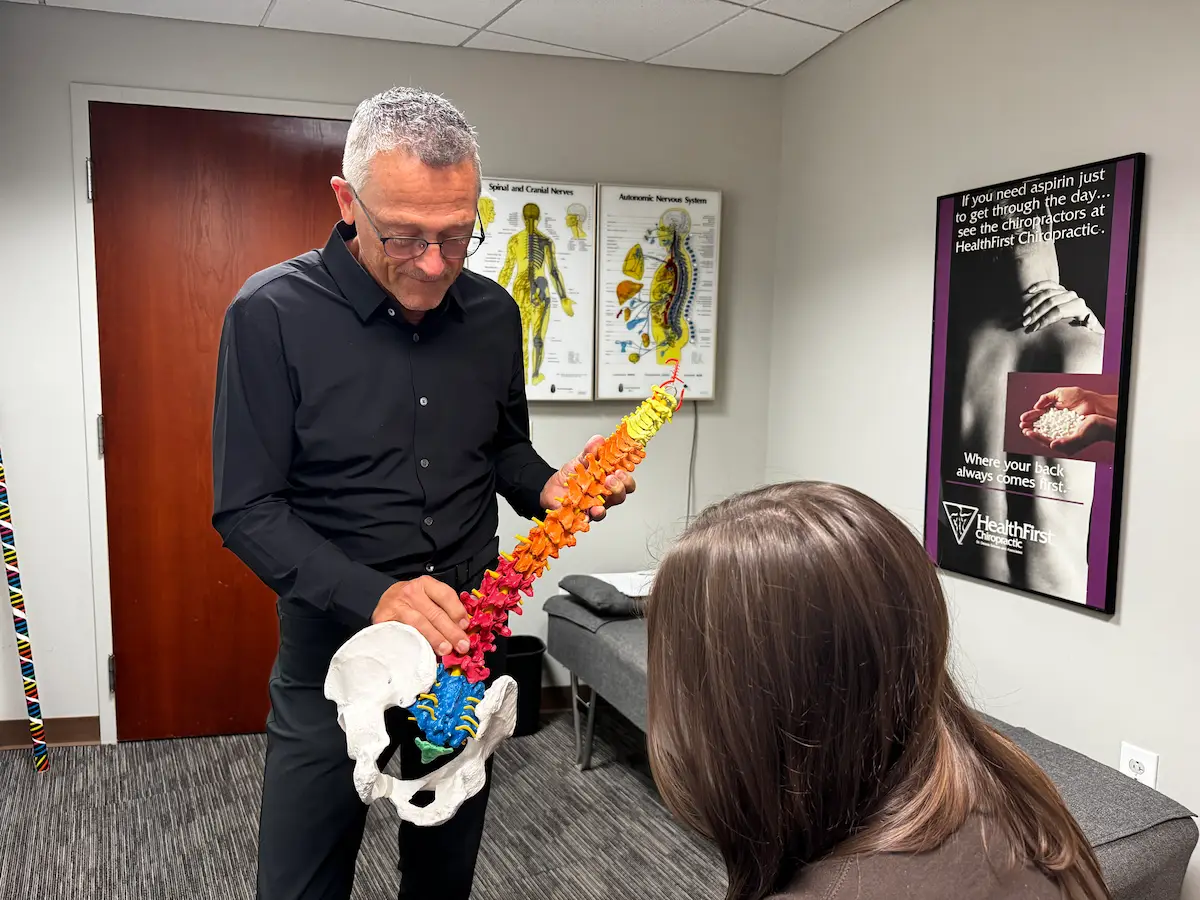
A chiropractor demonstrates a colorful spine and pelvis model to a patient in a clinic setting.

Step 1 - Consult

Every patient relationship at HealthFirst starts with a real conversation. Your doctor sits down with you and asks the questions that matter: what’s the problem, when did it start, what makes it better or worse, what have you already tried, and what does getting better actually look like for you.
This isn’t intake paperwork dressed up as a consultation. It’s a genuine clinical interview that shapes everything that follows. The details patients often think aren’t important – the old injury from ten years ago, the job that has them sitting for eight hours a day, the way the pain changes with the weather – are frequently the details that point toward the actual source of the problem.

Step 2 - Diagnose

Once the consultation is complete, your doctor runs a thorough examination. This includes orthopedic and neurological testing, chiropractic assessment with palpation and motion analysis, postural evaluation, and range of motion testing. In most cases, digital X-rays are taken on-site.
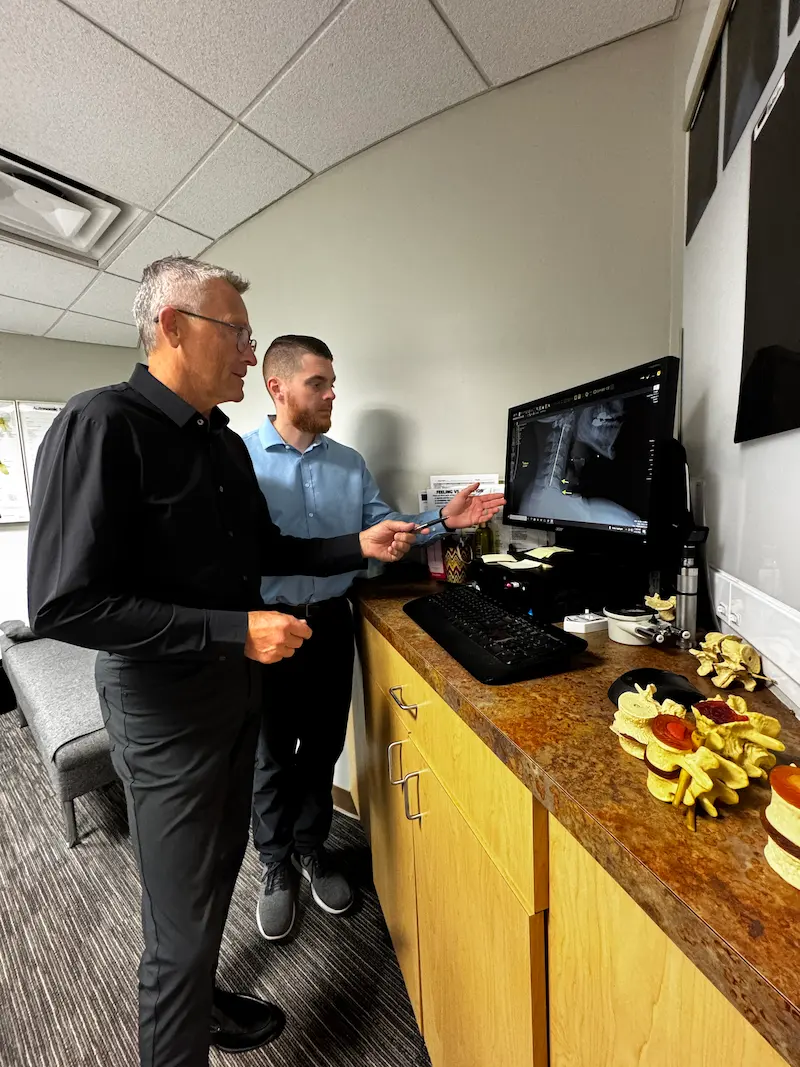
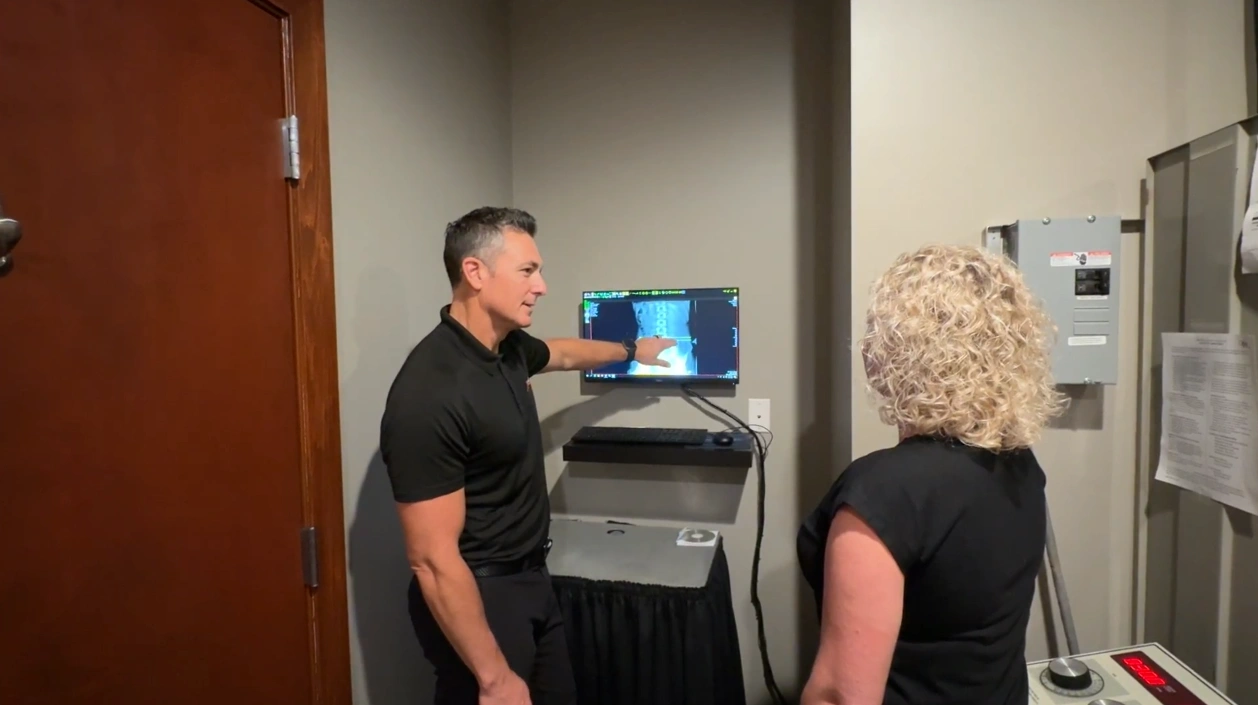
The X-ray component is worth explaining. The Gonstead system uses X-ray analysis not just to rule out pathology but to understand the structural picture of your spine – the angles, the disc spaces, the positioning of individual vertebrae. That information directly informs which levels are adjusted, at what angle, and with how much force. It’s the difference between a targeted correction and a general manipulation.
The goal of this step is a complete, confident clinical picture. We don’t move to the next step until we have one.
Two men, one older and one younger, standing and looking at a computer screen displaying a spinal X-ray. Anatomical spine models are on the counter next to the monitor.
A man in a black shirt points at a medical scan on a computer screen while a woman with curly blonde hair looks on.

Step 3 - Result of Tests and Care Plan

Your second visit is your result of tests. Your doctor walks you through exactly what was found, what it means in plain language, and what the recommended course of care looks like. This includes how long treatment is expected to take, how frequently you’ll be seen, what services are involved, and what the cost looks like.

You’ll have time to ask questions. There’s no pressure to start immediately. If we can help you, we’ll tell you clearly and specifically why. If your situation is better served by a different provider or a referral to a specialist, we’ll tell you that too.
Your first adjustment typically happens at this visit, after you’ve reviewed and agreed to the plan.

After Care Begins - Progress Exams

Our process doesn’t stop at the care plan. We run periodic progress exams throughout your course of care to assess how you’re responding and whether adjustments to the plan are needed. These exams use the same objective measures as your initial assessment so we can compare apples to apples.
If you’re improving on track, we continue. If something isn’t responding as expected, we reassess and adjust the approach. You always know where you stand.
Two women in an office setting, one with curly blonde hair seen from behind, and another woman with brown hair writing on a clipboard at a desk.

Frequently Asked Questions About Our Process

Why don't you adjust on the first visit?

Because adjusting before we know what’s wrong isn’t good clinical practice. Our first visit is the consultation and exam. Your first adjustment happens at visit two, after you’ve seen your tests and agreed to a care plan. That’s the process we’d want if we were the patient.

How long does the whole process take at the start?

Your first visit is about 45 minutes. Your result of tests visit is typically a bit shorter. From there, regular visit durations are shorter but it depends on which services are in your care plan.

What if I've already had X-rays or an MRI somewhere else?

Bring them. We’ll review any existing imaging as part of your workup. In some cases we may still take our own X-rays for the Gonstead analysis – your doctor will explain if that’s needed and why.

What happens if you find something you can't help with?

We’ll tell you directly and refer you to the appropriate provider. HealthFirst has working relationships with MDs and neurosurgeons in central Ohio and coordinates referrals when the situation calls for it.

Our Two Locations

Westerville

Mon, Wed, Fri: 8am - 12pm | 2pm - 6pm
Thu: 8am - 12pm
Tue, Sat, Sun: Closed

Pickerington

Mon, Wed, Fri: 7:30am - 12pm | 2pm - 6pm
Thu: 8am - 12pm
Tue, Sat, Sun: Closed