Herniated and Bulging Disc Care at HealthFirst Chiropractic
A herniated or bulging disc doesn’t have to mean surgery – at HealthFirst Chiropractic, our doctors identify exactly which disc is involved and address it with precision. From Gonstead adjustments to spinal decompression, we have the tools to treat disc injuries at the source.
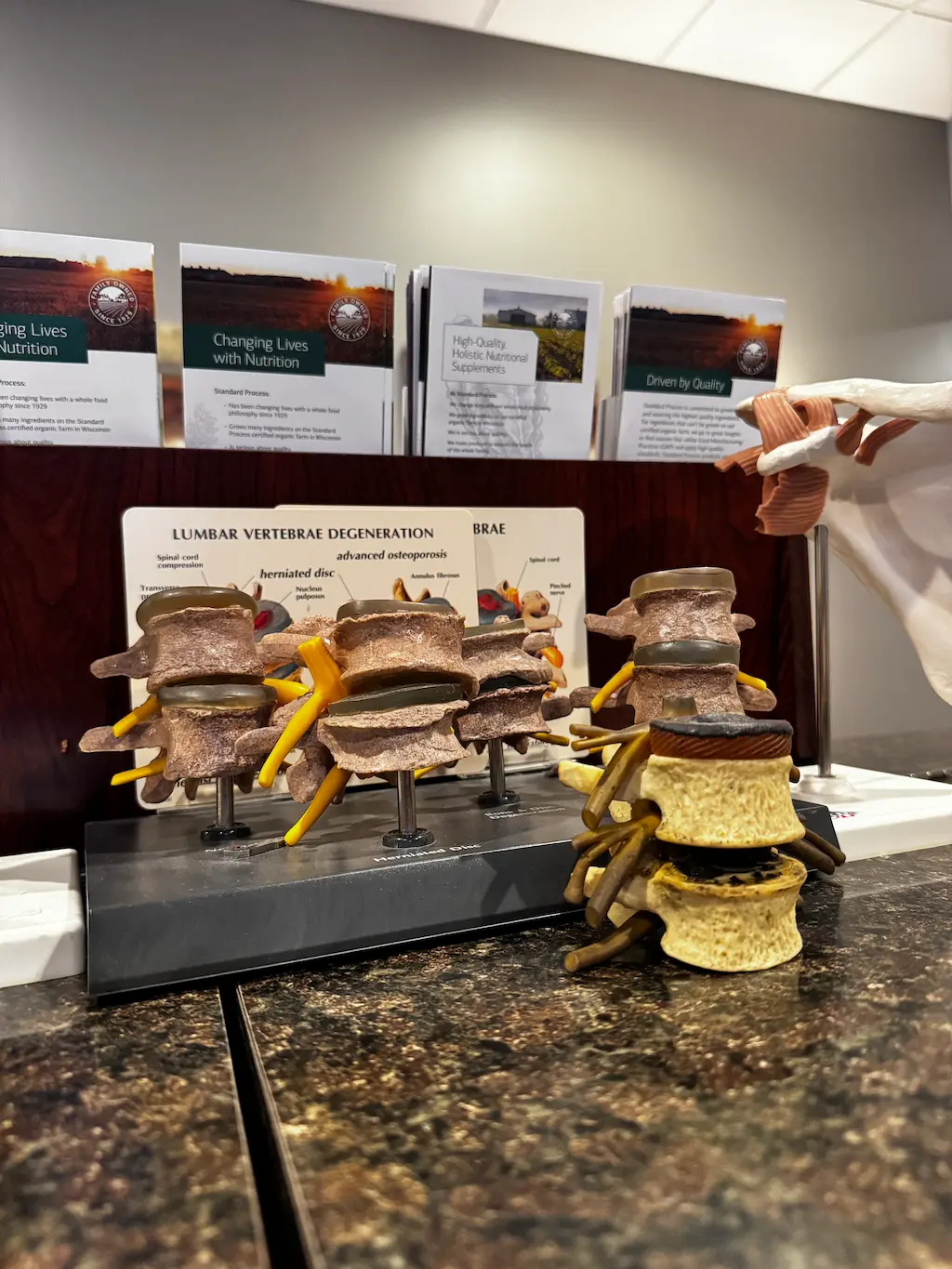
Anatomical models of lumbar vertebrae showing herniated disc and osteoporosis, with informational brochures on nutrition and spinal health in the background.

What's Actually Happening With a Disc Problem

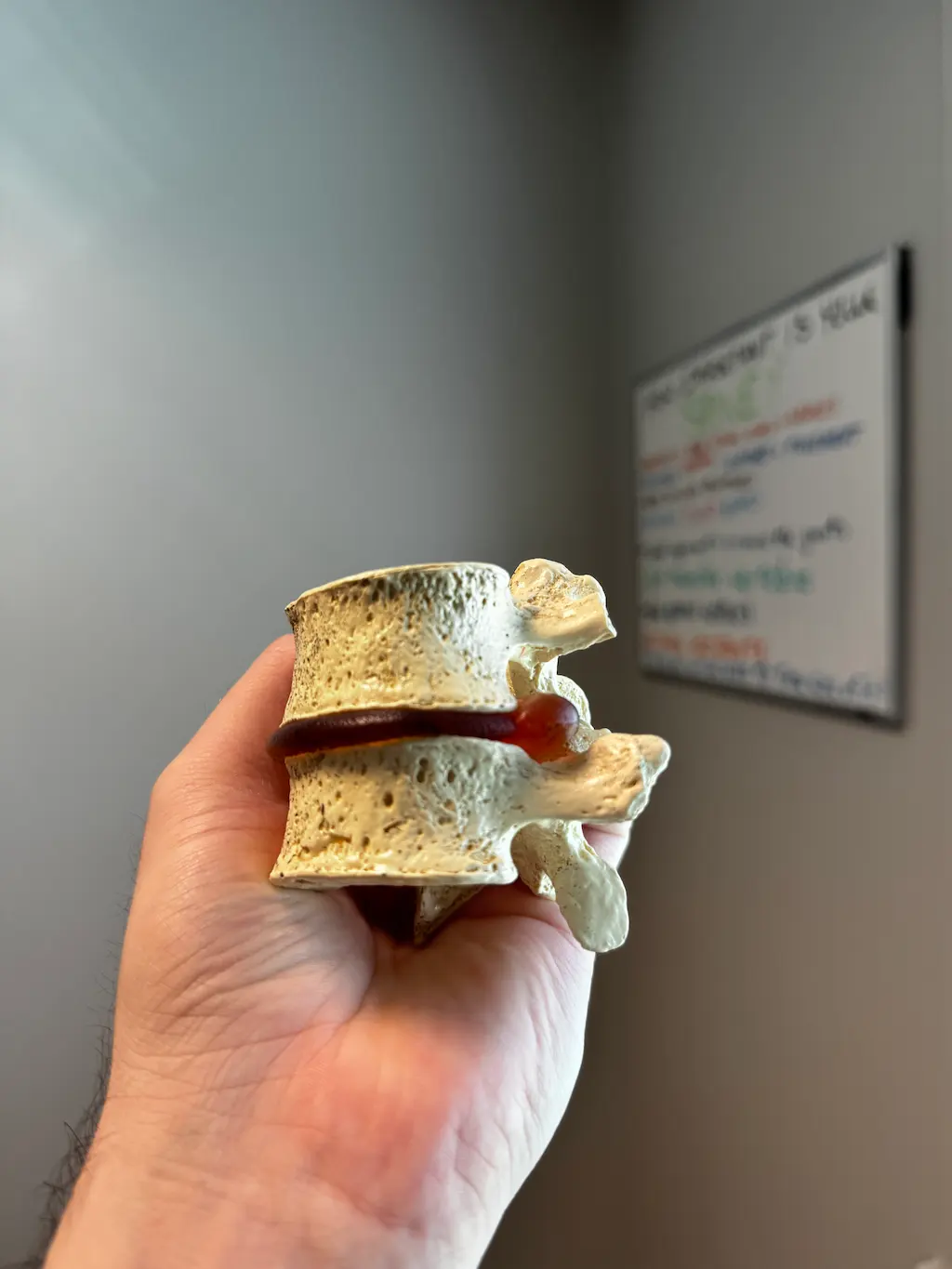
Spinal discs sit between the vertebrae and act as shock absorbers for the spine. Each disc has a tough outer layer and a gel-like center. When the outer layer weakens or tears – from injury, repetitive stress, or gradual degeneration – the inner material can push outward and press on nearby nerve roots. That pressure is what produces the deep aching, shooting pain, numbness, and weakness that disc patients know well.
A bulging disc extends beyond its normal boundary but remains intact. A herniated disc involves a tear in the outer layer with inner material pushing through – typically causing more intense nerve compression and inflammation. Both conditions respond well to conservative care when the right approach is applied to the right level.

Common Symptoms of a Disc Problem

A hand holds a medical model of two bone-colored vertebrae with a dark red herniated disc protruding between them. A blurred whiteboard is in the background.

How HealthFirst Treats Disc Injuries

Chiropractic Adjustments

Gonstead adjustments restore proper motion and positioning to the vertebrae surrounding the affected disc, reducing mechanical stress on the disc and nerve root. For patients who are too acute for standard hands-on adjustments, flexion-distraction offers a gentler table-assisted decompression that pumps nutrients back into the disc while reducing pressure on the nerve. Both are available at our Westerville and Pickerington offices.

Spinal Decompression

For disc herniation with significant nerve involvement, spinal decompression creates a controlled traction force that reduces intradiscal pressure, allows bulging material to retract toward the center of the disc, and promotes the flow of fluid and nutrients the disc needs to heal. Available at our Pickerington office and particularly effective for sciatica caused by disc compression at L4-L5 or L5-S1.

Cold Laser Therapy

Laser therapy addresses the inflammatory component surrounding the compressed nerve root – the swelling that contributes to the burning, shooting sensation. Reducing that inflammation helps adjustments hold and accelerates the healing environment around the disc.

Surgery Is Not the Only Option

The majority of herniated and bulging disc cases resolve with conservative care. Surgery becomes necessary in a small number of cases – typically involving severe progressive neurological compromise, loss of bowel or bladder control, or rapidly worsening weakness. For most patients experiencing pain, numbness, or sciatica from a disc, conservative care is both appropriate and effective.
The body also has a natural ability to reabsorb disc material over time when the mechanical pressure causing the problem is addressed. That process works best when care starts early and addresses the actual structural cause rather than just managing symptoms.

Frequently Asked Questions About Disc Injuries

Can chiropractic actually fix a herniated disc or does it just manage the pain?

For many patients, chiropractic care – particularly when combined with spinal decompression – produces genuine structural improvement, not just symptom relief. The disc has the ability to reabsorb herniated material over time when the mechanical stress driving the problem is corrected. That said, outcomes depend on the severity of the herniation, how long it has been present, and how consistently care is followed. Your doctor will give you an honest assessment at your result of tests.

Do I need an MRI before starting treatment?

Not necessarily. A thorough clinical exam and X-rays give us enough information to begin care in most cases. If your presentation suggests something that warrants MRI confirmation – significant neurological symptoms, rapidly progressing weakness, or a complex clinical picture – your doctor will refer you for imaging.

Is it safe to get adjusted with a herniated disc?

Yes, when performed by a trained provider who has reviewed your imaging and exam findings. Our Gonstead approach is specific to the level involved and adapted to your clinical presentation. Patients who are too acute for standard adjustments start with gentler techniques and progress as they heal.

How long does recovery take?

That depends on the severity of the herniation, how long you’ve had it, and how your body responds to care. Meaningful improvement is often felt within the first several visits. Full recovery for significant disc injuries typically takes several weeks to months. Your doctor will outline a realistic timeline at your result of tests.

What daily habits make disc pain worse?

Prolonged sitting with a forward lean, bending and twisting under load, sleeping on your stomach, and any posture that keeps the spine in flexion for extended periods all increase disc pressure. Your doctor will go over specific recommendations based on your situation.