Table of Contents
The main difference between Gonstead and traditional chiropractic comes down to precision. Traditional chiropractic often relies on general manipulation and the practitioner’s feel, while the Gonstead technique pinpoints the exact problem area using X-ray analysis, instrumentation, and hands-on palpation before any adjustment happens. At HealthFirst Chiropractic, all five of our doctors trained in the Gonstead system at Palmer College of Chiropractic, so your care starts with a confirmed diagnosis instead of guesswork.
What Traditional Chiropractic Care Usually Looks Like
Most chiropractic offices use a general approach. The doctor asks where you hurt, feels along the spine, and performs adjustments based largely on experience and what the area feels like under their hands.
This style can bring short-term relief, and plenty of people feel looser after a visit. The catch is that general manipulation does not always target the specific joint causing the problem.
When the source of the pain is never identified first, you can end up with repeated adjustments to areas that were never the real issue. That is one reason some patients tell us chiropractic “didn’t work” for them in the past. The care was not wrong so much as it was aimed at the wrong place.
What Makes the Gonstead Technique Different
The Gonstead system was built around one idea: find the exact problem before you touch it. Rather than adjusting broadly, a Gonstead chiropractor identifies the specific vertebral level that is misaligned or restricted, then corrects that level with a targeted adjustment.
Reaching that level of accuracy takes more than skilled hands. Our doctors use three tools together on every patient, and an adjustment only happens once all three agree.
X-ray Analysis Before Treatment
Digital X-rays are taken on-site at both our Westerville and Pickerington offices. These images give our doctors a structural picture of your spine, including disc spaces, vertebral angles, and how everything is positioned.
This step matters because two people with identical symptoms can have very different spines. Seeing the structure first means the adjustment fits your body, not a one-size template.
Instrumentation and the Nervoscope
Our doctors also use instrumentation, a handheld device often called a nervoscope, that detects heat differences along the spine. Areas of inflammation tend to read warmer, which helps confirm where a problem actually sits.
It is an objective check. The reading either supports what the X-ray and exam already show, or it does not, which keeps the diagnosis honest.
Static and Motion Palpation
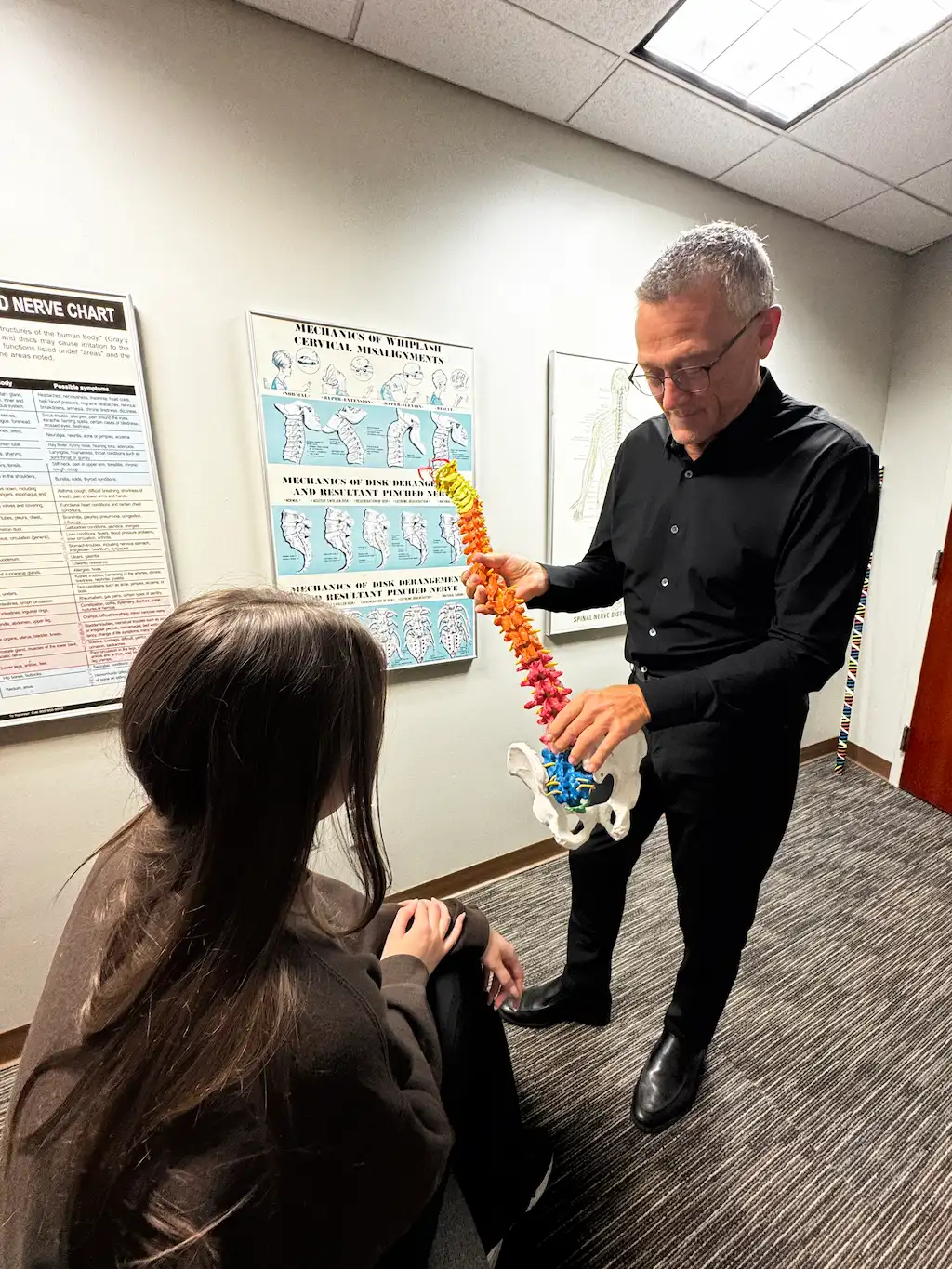
Palpation is the hands-on part of the exam. Our doctors feel the spine while you are still and while you move, checking for restricted joints, muscle tension, and segments that are not moving the way they should.
When the X-ray, the instrumentation, and the palpation all point to the same spot, that is the area we treat. Three sources of information, one confirmed target.
Why This Precision Changes Your Results
A targeted adjustment does more than feel good for an afternoon. When the correct joint is moved correctly, the change tends to hold longer, and you often need fewer visits chasing the same problem.
General manipulation can sometimes adjust joints that were already moving fine while missing the stiff one underneath. Gonstead is designed to avoid exactly that.
In our experience treating patients across central Ohio, people who have struggled with recurring pain often respond well once the real source is identified and addressed specifically rather than broadly.
Trusted by MDs and Neurosurgeons in Central Ohio
One sign that this approach holds up is who sends us patients. We receive referrals from medical doctors and neurosurgeons in the Columbus area, including people who have already explored other options.
That kind of referral does not happen by accident. It reflects a diagnostic process that physicians trust to be careful and specific, not a quick crack-and-go visit.
What This Means for Your First Visit
Because diagnosis comes first, you will not get adjusted on day one at HealthFirst. Your first visit, about 45 minutes, is for the consultation and exam, including any X-rays.
On your second visit, your doctor walks you through the result of tests in plain language: what was found, what it means, and how we can help. Your first adjustment usually happens at that visit, once you understand the plan. You can read more about how this works on our process page.
Some people are surprised by the wait. Once they see the reasoning, most appreciate that nobody is adjusting their spine before knowing what is actually wrong with it.
Which Approach Is Right for You?
If you have a simple, short-term issue and want quick general care, traditional chiropractic may be enough. If you have dealt with pain that keeps returning, or you want to know exactly what is going on before treatment, the Gonstead approach is built for that.
Our Westerville team, including Dr. Jason Schone and Dr. Ryan Zullo, and our Pickerington team, led by Dr. Dennis Schone with over 40 years of Gonstead experience, all use the same diagnosis-first method. You can learn more about our chiropractic care and how we treat conditions like low back pain and sciatica.
Want to know what is really causing your pain instead of guessing at it? Contact HealthFirst Chiropractic in Westerville at 614-890-2740, in Pickerington at 614-861-1333, or reach out online.